Views: 0 Author: Site Editor Publish Time: 2025-07-25 Origin: Site


In the world of high-performance alloys, 17-4PH precipitation hardening stainless steel forging stands out as a material of choice for industries that demand strength, toughness, and corrosion resistance. From aerospace components to petrochemical valves, the unique properties of 17-4PH have made it an essential solution in engineering applications where traditional stainless steels fall short.
But what exactly makes 17-4PH stainless steel so effective in forged parts? And why is forging the preferred method of shaping this versatile alloy for critical applications? This article explores the fundamentals, advantages, and applications of 17-4PH stainless steel forgings and how they contribute to stronger, longer-lasting components.
17-4PH—also known as Grade 630 or UNS S17400—is a precipitation hardening (PH) martensitic stainless steel alloy. The name “17-4” refers to its chemical composition: approximately 17% chromium and 4% nickel, with small additions of copper (3–5%), manganese, and niobium. These alloying elements provide a combination of excellent mechanical properties and corrosion resistance.
The key feature of 17-4PH is its ability to be heat-treated to high strength levels through precipitation hardening—a thermal process that precipitates fine particles within the metal matrix, increasing its hardness and tensile strength without sacrificing ductility.
When forged under the correct conditions, 17-4PH precipitation hardening stainless steel offers an outstanding balance of mechanical strength, corrosion resistance, and manufacturability. These qualities make it a preferred material in demanding industries such as aerospace, petrochemical, and marine engineering. Below are some of the most significant benefits of using 17-4PH in stainless steel forging applications:
One of the most distinguishing characteristics of 17-4PH is its ability to achieve extremely high strength through precipitation hardening. When subjected to controlled heat treatments—such as H900, H1025, or H1150—the alloy can attain tensile strengths exceeding 1300 MPa and yield strengths over 1100 MPa. This allows components to be lighter yet structurally robust, making them particularly valuable in applications where weight savings are essential, such as aircraft structural parts, missile components, and pressure vessels.
17-4PH stainless steel is engineered to provide superior corrosion resistance, making it comparable to widely used austenitic grades like 304 and 316. It performs well in a variety of corrosive environments, including mildly acidic or chloride-containing atmospheres, and demonstrates notable resistance to:
Pitting corrosion
Crevice corrosion
Stress corrosion cracking (SCC)
During forging and subsequent aging treatments, 17-4PH exhibits excellent dimensional stability. Components made from this alloy experience minimal distortion or warping, which is essential for parts requiring tight tolerances and intricate geometries—such as turbine blades, gear shafts, and precision fasteners.
While many high-strength alloys present machining challenges, 17-4PH is relatively easy to machine in its solution-annealed or H1150 condition. Its machinability index is similar to that of 304 stainless steel, making it suitable for complex geometries and detailed work.
In terms of welding, 17-4PH supports common techniques such as:
Gas Tungsten Arc Welding (GTAW)
Shielded Metal Arc Welding (SMAW)
Additional Highlights:
Magnetic Properties: Unlike most austenitic stainless steels, 17-4PH is magnetic, which can be advantageous in certain sensor or actuator applications.
Wide Operating Temperature Range: Maintains mechanical properties from cryogenic temperatures up to around 600°F (316°C).
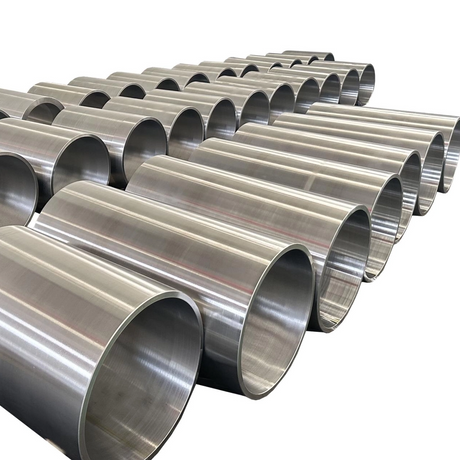
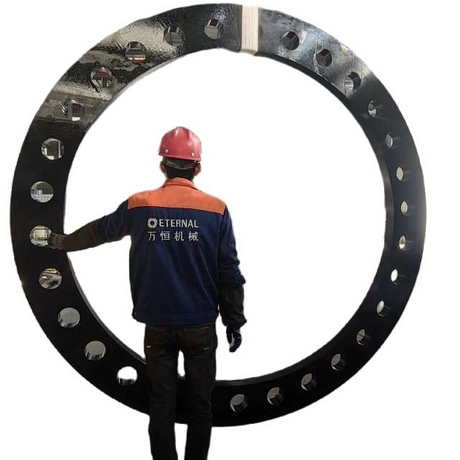
Forging is a manufacturing process in which metal is shaped using compressive force—typically by hammering, pressing, or rolling. When applied to 17-4PH stainless steel, forging offers several advantages over other manufacturing methods like casting or machining:
Grain Refinement: Forging refines the grain structure, improving fatigue strength and impact resistance.
Directional Strength: The directional grain flow aligns with the shape of the part, enhancing mechanical properties where they are most needed.
Reduced Defects: Forged parts are less likely to contain internal voids, porosity, or inclusions compared to castings.
Improved Surface Finish: Forged components often require less surface machining and finishing, reducing cost and time.
In critical industries—such as oil and gas, defense, and power generation—where reliability is paramount, 17-4PH precipitation hardening stainless steel forging provides a superior solution for high-load, high-wear components.
Because of its ideal combination of mechanical strength and corrosion resistance, 17-4PH is widely used in industries that require durable, high-performance components. Key applications include:
Landing gear components
Engine parts and turbine blades
Missile fittings and airframe hardware
These components benefit from the high strength-to-weight ratio and stress resistance of 17-4PH forgings.
Valve bodies and seats
Pump shafts and wellhead equipment
Subsea fasteners and couplings
Forged 17-4PH performs well in environments exposed to saltwater, pressure, and temperature extremes.
Surgical instruments
Orthopedic implants
Dental tools
The biocompatibility and machinability of 17-4PH make it suitable for high-strength medical components.
Spray nozzles
Shafts and fittings in washdown environments
Agitator blades and mixing paddles
Its resistance to corrosion, especially in mildly acidic or alkaline environments, makes 17-4PH a valuable choice for sanitary systems.
The performance of 17-4PH is highly dependent on its aging treatment condition, which controls its hardness, strength, and ductility. Common conditions include:
Condition | Aging Temp (°F/°C) | Tensile Strength (MPa) | Yield Strength (MPa) | Elongation (%) |
H900 | 900°F (482°C) | ~1310 MPa | ~1170 MPa | 10–12% |
H1025 | 1025°F (552°C) | ~1170 MPa | ~1035 MPa | 13–15% |
H1150 | 1150°F (621°C) | ~1060 MPa | ~930 MPa | 16–18% |
Each condition offers a different balance of strength, toughness, and corrosion resistance, allowing engineers to tailor the material to the needs of their application
While 17-4PH offers a wide array of benefits, engineers and manufacturers must consider the following:
Heat Treatment Control: Precise thermal cycles are essential to achieving the desired mechanical properties.
Weld Repair Limitations: Post-weld heat treatment is often necessary to restore material properties, especially in critical applications.
Cost Factors: While not as costly as exotic alloys, 17-4PH is more expensive than standard carbon steels—justified by its performance.
Working with experienced forging specialists ensures that these factors are managed properly, delivering consistent results.
Given the technical challenges and high performance expectations associated with 17-4PH forgings, choosing the right manufacturing partner is critical. A capable supplier will offer:
Expertise in closed-die forging, open-die forging, and precision machining
In-house heat treatment and testing capabilities
Certifications such as ISO 9001, AS9100, or NADCAP (for aerospace applications)
Technical support for material selection, design optimization, and quality assurance
The demand for 17-4PH precipitation hardening stainless steel forging continues to grow as industries seek high-strength, corrosion-resistant solutions for increasingly demanding applications. With its unique ability to offer both toughness and durability in corrosive environments, 17-4PH stands out as a go-to alloy in aerospace, oil and gas, medical, and many other sectors.
Whether you're developing precision components for aircraft engines or rugged tools for marine drilling, 17-4PH forgings deliver long-lasting performance that justifies their cost and complexity. Forging this alloy unlocks its full potential by enhancing its strength, refining its structure, and ensuring reliability under stress.
To explore how 17-4PH stainless steel forgings can enhance your product performance, visit www.e-poems.org. Guangdong Eternal Metal Co., Ltd. offers deep expertise in forging high-performance stainless steels, including 17-4PH, with customized solutions for aerospace, medical, energy, and industrial applications. Their team can support your design and manufacturing needs from start to finish—efficiently, precisely, and reliably.