Views: 0 Author: Site Editor Publish Time: 2025-11-21 Origin: Site


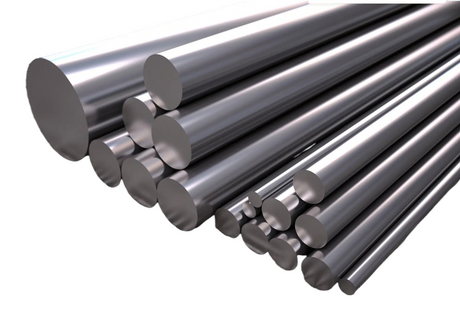
Cr12MoV steel is a widely used high Cr micro deformation cold work die steel in China,belonging to the category of martensitic steel. In production, traditional processes often fail to eliminate large eutectic carbides or severe network carbides, resulting in poor toughness and brittle fracture of molds, and short service life.
After analysis, if the workpiece is immediately heated to the initial forging temperature after final forging, all carbides are dissolved and a single austenite is obtained, and then quickly cooled below the phase transformation point, the abnormal growth of austenite grains can be suppressed, and more importantly, the network precipitation and angular formation of carbides can be suppressed. The broken carbides can also avoid reconnection, and then a high temperature tempering at 720-750 ℃ can be added. On the basis of improving the internal quality of the mold, shorten the production cycle and save energy.
Adjust and improve each process based on the microstructure characteristics of Cr12MoV steel. Here are three other improved processes introduced.
(1) Low temperature quenching+low-temperature tempering process, namely austenitization at 950-1000 ℃, oil or salt bath quenching, tempering at 200-250 ℃, with a hardness of 58-62 HRC. The mold processed by this process has high hardness and toughness, but its compressive strength is low and it is not suitable for processing cold extrusion molds.
(2) High temperature quenching+high temperature tempering process, namely austenitization at 1100-1150 ℃, oil or salt bath quenching, tempering twice at 500-520 ℃, with a hardness of nearly 60 HRC. The mold processed by this process can achieve high hardness and compressive strength, suitable for stretching molds for aluminum materials and hot extrusion molds for brass plates. But due to poor toughness, it is not suitable for handling cold work molds.
(3) The process of medium temperature quenching+medium temperature tempering involves austenitizing at 1020 ℃, quenching in oil or salt bath, and tempering twice at 400-420 ℃, resulting in a hardness of 56-58 HRC. The mold processed by this process can achieve the best strength, toughness, and high fracture resistance, and is most suitable for processing rolling dies and complex cold stamping dies with cutting edges.
In summary, the austenitization of Cr12MoV steel at 1100-1150 ℃ allows almost all carbides to dissolve in the austenite, followed by rapid spheroidization at 720 ℃ → 750 ℃ → 720 ℃ immediately after rapid cooling, which can completely eliminate network carbides and large pointed carbides, and eliminate the inheritance of coarse structures. After final heat treatment, the grain size can reach 10-12 levels, and the carbide particles are refined and round, which greatly increases the impact toughness of the steel and prolongs the service life of the mold.
It is extremely important to improve the non-uniformity of eutectic carbides as a major technical key to tap into the potential of Cr12MoV steel. Combining forging process with heat treatment process can significantly improve the internal quality of the workpiece while also achieving significant energy-saving and shortened production cycle effects, which should be vigorously promoted.