Views: 0 Author: Site Editor Publish Time: 2025-07-25 Origin: Site


As the demand for precision, durability, and reliability intensifies across high-performance sectors, material engineers and manufacturers continue to rely on advanced alloys to meet these challenges. One such standout material is 17-4PH precipitation hardening stainless steel forging, a versatile and robust alloy renowned for its superior mechanical strength, corrosion resistance, and heat treatability.
In this article, we explore why 17-4PH stainless steel forgingsare indispensable in both aerospace and medical industries, the technical characteristics that set this material apart, and how the forging process enhances its properties to support mission-critical applications.
17-4PH, also known as UNS S17400 or Type 630, is a chromium-nickel-copper stainless steel alloy with the ability to undergo precipitation hardening—an age-hardening heat treatment that dramatically increases strength and hardness. The "17-4" designation refers to its composition: approximately 17% chromium and 4% nickel, along with small amounts of copper and niobium.
Key Properties of 17-4PH:
anical strength, even at high temperatures
Good corrosion resistance, comparable to Type 304 stainless steel
High hardness and wear resistance after heat treatment
Strong dimensional stability during machining and thermal cycling
Good weldability and machinability
When forged correctly, this alloy can reach tensile strengths exceeding 1250 MPa (180 ksi), making it ideal for structural and load-bearing components in extreme environments.
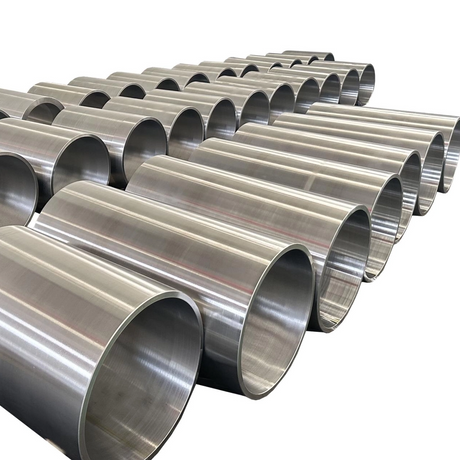
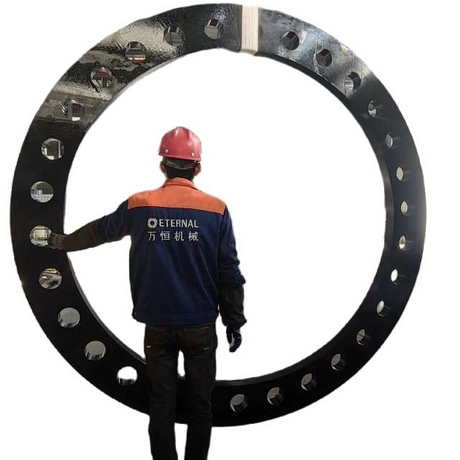
Forging is a manufacturing process that involves shaping metal using localized compressive forces, typically delivered by a hammer or die. When applied to 17-4PH precipitation hardening stainless steel, forging not only imparts the desired shape but also significantly enhances the material’s mechanical properties.
During the forging process, the grain structure of 17-4PH stainless steel becomes refined and oriented in the direction of the applied forces. This grain flow alignment improves the strength and fatigue resistance of the final part, particularly in high-stress applications. In contrast, casting results in random grain orientations and potential internal voids, while machining removes material but doesn’t improve its internal structure.
Compared to cast or machined components, 17-4PH stainless steel forgings offer:
Improved fatigue resistance: The directional grain flow helps prevent crack initiation and propagation under cyclic loads, making forged parts ideal for rotating or vibrating components.
Better impact strength: Forged parts can absorb sudden shocks and stresses more effectively than their cast or machined counterparts, which is essential in both aerospace and medical applications.
Reduced porosity and internal defects: Casting often introduces air pockets or shrinkage cavities. Forging compresses the metal, minimizing voids and resulting in a denser, more uniform structure.
Higher consistency and performance reliability: The forging process is tightly controlled, leading to repeatable results and greater dimensional accuracy, especially when combined with post-forge heat treatment.
The aerospace industry demands lightweight, high-strength materials that can endure mechanical stress, fluctuating temperatures, and corrosive environments. 17-4PH stainless steel meets all these criteria.
Aircraft engines are subject to extreme operating conditions. Forged parts made from 17-4PH are used in:
Compressor blades
Turbine shafts
Valve bodies
Fuel system components
Its ability to maintain strength at temperatures up to 600°F (316°C) makes it suitable for these thermally intense applications.
Landing gear components must withstand repeated impact loads and exposure to environmental elements. Forged 17-4PH parts provide:
High toughness for impact absorption
Corrosion resistance for prolonged outdoor exposure
Lightweight strength for fuel efficiency
Control surfaces such as flaps and ailerons rely on precision hydraulic or electromechanical actuation. Forged 17-4PH shafts, rods, and fittings ensure:
Dimensional stability under load
Resistance to wear and fatigue
Compatibility with aerospace-grade lubricants and fluids
Aircraft fasteners must maintain joint integrity across pressure cycles. 17-4PH forging produces:
High-strength, corrosion-resistant bolts and screws
Weight-optimized designs without sacrificing safety
These fasteners are often used in both pressurized cabins and engine compartments.
In the medical field, material performance isn’t just about engineering—it directly affects human health and safety. 17-4PH’s biocompatibility, sterilization resistance, and strength make it a trusted material for surgical and diagnostic applications.
Scalpels, orthopedic tools, and dental instruments require precise shaping and sharpness. Forged 17-4PH parts allow for:
High hardness for edge retention
Resistance to repeated autoclave sterilization
Biocompatibility to prevent adverse reactions
Forging also allows for thinner and more ergonomic designs, benefiting both surgeons and patients.
Implants such as spinal fixation devices, bone screws, and joint replacement components require:
Load-bearing capacity without deformation
Resistance to bodily fluids and tissue corrosion
Dimensional accuracy for compatibility with human anatomy
Forged 17-4PH is often used for temporary implants or structural surgical supports where long-term biocompatibility is needed alongside strength.
MRI-compatible components, moving assemblies, and precision fasteners in diagnostic machinery often use forged 17-4PH parts due to:
Minimal magnetic interference
Consistent performance in temperature-controlled environments
Wear resistance in high-frequency or rotating systems
Dentists and surgeons require miniaturized yet high-strength components. 17-4PH forgings are ideal for:
Brackets and orthodontic tools
Surgical plates for jaw reconstruction
Custom abutments for implants
Its balance between machinability and structural strength makes it a popular choice in custom medical device manufacturing.
The properties of 17-4PH stainless steel can be fine-tuned using a range of age-hardening treatments, designated as H900, H1025, H1150, etc., where the number indicates the temperature in Fahrenheit used during aging.
H900: Highest strength, slightly lower toughness
H1025: Balanced strength and ductility
H1150: Greater toughness and corrosion resistance
This ability to tailor mechanical properties allows manufacturers to optimize components based on use case—whether maximizing hardness for wear parts or improving ductility for impact resistance.
Though highly versatile, forging 17-4PH stainless steel comes with challenges that require expertise and precision:
Overheating can lead to grain growth, reducing toughness. Strict process controls during forging and heat treatment are essential.
Due to its hardness, 17-4PH can wear out tooling quickly. High-performance die materials and proper lubrication extend tool life.
While machinable, 17-4PH becomes increasingly difficult to machine after hardening. Pre-hardened or solution-annealed machining may be used when tight tolerances are required.
Partnering with an experienced forging specialist is crucial to managing these variables effectively.
As industries continue to push the boundaries of performance and precision, demand for high-strength stainless steels like 17-4PH is only growing. Innovations in forging technologies—such as closed-die forging, isothermal forging, and automated heat treatment integration—are making it possible to produce increasingly complex parts with minimal waste and superior consistency.
Furthermore, as additive manufacturing (3D printing) of 17-4PH becomes more viable, hybrid manufacturing approaches are also being explored—combining the structural benefits of forging with the design flexibility of printing.
17-4PH precipitation hardening stainless steel forging is not just a technical achievement—it’s a critical enabler of performance, safety, and reliability in industries where failure is not an option. Whether ensuring the safe landing of an aircraft or the precise function of a surgical implant, 17-4PH forged components continue to prove their value.
Their high strength, corrosion resistance, and customization potential make them a top choice for engineers and designers across aerospace and medical sectors. With the right forging partner, manufacturers can fully leverage the capabilities of this alloy to create parts that perform under pressure—literally and figuratively.
If you're looking to source high-quality 17-4PH stainless steel forgings or need assistance with material selection, precision forging, or custom part development, consider connecting with the experts at www.e-poems.org. With advanced manufacturing facilities and a deep understanding of alloy performance, they provide tailored solutions for demanding industries worldwide.